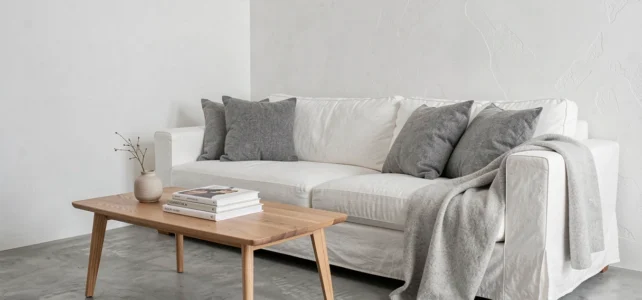
A white wall, a gray sofa, and the room seems flat. The problem does not come from the colors themselves, but from the way they interact. The white and gray duo works as long as you master the shades, proportions, and materials.
In recent years, the trend has shifted away from the cold gray that was ubiquitous in 2010s interiors towards warm grays and off-whites that bring softness without sacrificing brightness.
Hue Temperature: The Invisible Trap of Grayish White in Decoration
Have you ever noticed that a white wall can appear bluish in the morning and yellowish in the evening? It’s the hue temperature at play. A pure white (cold) placed next to an anthracite gray (also cold) results in an austere, almost clinical look.
To avoid this pitfall, you need to mix temperatures. A warm gray, slightly leaning towards beige (sometimes referred to as greige), paired with an off-white or ivory creates a cozy atmosphere. Conversely, a bluish gray works better with a pure white in a very bright, south-facing room.
The most reliable test is to place paint samples directly on the targeted wall and observe them at three different times of the day. Natural light radically alters the perception of shades. A lovely pearl gray in the store can turn mauve in a north-facing room.
Exploring white and gray color combinations allows you to visualize concrete combinations before embarking on a complete project.
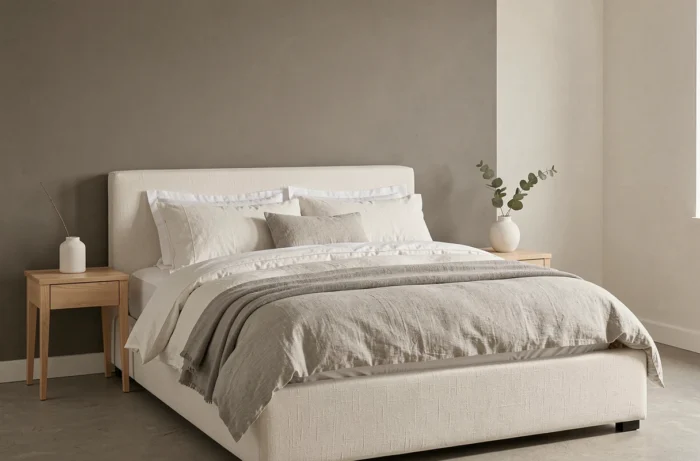
Distribution of White and Gray Colors in a Living Room
The proportion between white and gray changes everything. A simple rule works well: allocate about two-thirds of the visible surface to the lighter shade (often white) and one-third to gray. This avoids the cave effect of a too-dark living room or the hospital-like appearance of an entirely white room.
The Gray Accent Wall
Painting just one wall in a deep gray, the one that holds the sofa or the fireplace, anchors the gaze. The other three walls remain in off-white. The accent wall structures the room without darkening it.
In practice, choose the wall farthest from the main window. A medium to dark gray on this wall absorbs less light than one might think, while creating visual depth.
Floor, Ceiling, and Woodwork
The ceiling almost always benefits from remaining white, even slightly lighter than the walls. A gray ceiling visually compresses the ceiling height, except in very large spaces. For woodwork (baseboards, door frames), there are two options:
- Paint them the same white as the walls for a clean monochrome effect that visually enlarges the space.
- Treat them in a light gray, one tone below the accent wall, to highlight the architecture and add character to the room.
- Leave them in natural wood if the furniture allows, which immediately warms up the white-gray ensemble.
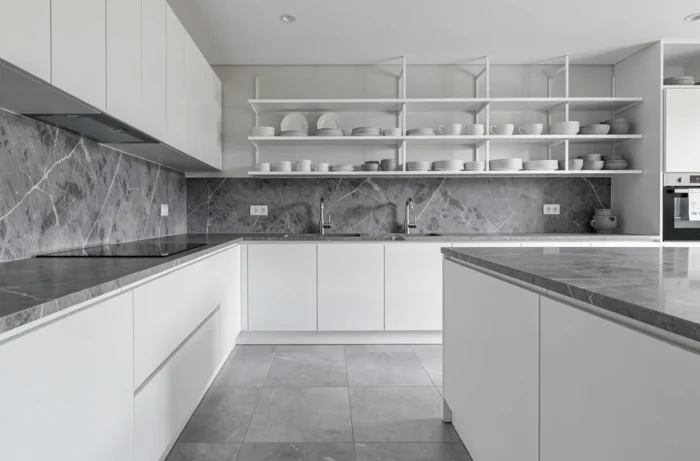
Materials and Textures That Prevent a White and Gray Interior from Looking Cold
Color alone is not enough. A white and gray living room made up solely of smooth surfaces (lacquered, glass, metal) will look like a waiting room. It is the materials that bring the warmth that neutral colors do not provide.
Wood is the most reliable ally. Light oak flooring or a walnut coffee table breaks the coldness of gray and creates a natural anchor. Linen, for curtains or cushions, adds a visible grain that catches light differently than smooth cotton.
Looped wool on a rug or throw, rattan on an accent chair, stoneware on a vase placed on a shelf: each material adds a layer of texture. A successful white-gray interior features at least three different textures in the same room.
Accent Color to Enhance the White and Gray Duo
White and gray form a backdrop. To bring the decoration to life, a third color is needed, used sparingly.
- Sage green or forest green harmonizes with warm grays and wooden furniture. A few cushions, a throw, or plants are enough.
- Pale pink or terracotta warms up a north-facing living room. It can be found on a vase, a frame, or a rug.
- Duck blue provides a strong contrast with anthracite gray, ideal for a space that lacks personality.
- Mustard yellow, used in touches, energizes a white-gray interior without distorting it.
The practical rule: the accent color should not exceed ten percent of the visible surface. Beyond that, it competes with the main duo instead of enhancing it.
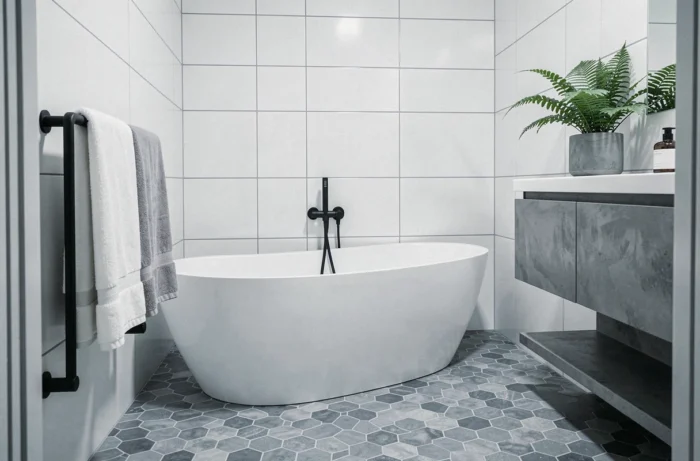
Interior Paint in White and Gray: A Health Criterion Often Ignored
The choice of a shade is not limited to aesthetics. Interior paints emit volatile organic compounds (VOCs) that affect air quality. In France, labeling ranges from A+ (very low emissions) to C. But the differences between labels are significant.
The European Ecolabel limits VOCs to 15 g/L for indoor wall paints, while the Ecocert certification imposes a much lower ceiling, at 3 g/L, with requirements on the natural origin of components. A white or gray simply labeled A+ can contain five times more VOCs than a product certified by Ecocert.
This criterion is particularly important in a bedroom or living room, spaces where people spend the most time. Checking the label before purchasing takes a few seconds and changes the air quality for months.
The white and gray duo remains a safe bet in decoration, provided you avoid lukewarm combinations. Mixing hue temperatures, varying textures, daring to use a well-measured accent color: these choices transform a neutral interior into a space with character. The last reflex to adopt, often overlooked, concerns the paint itself and its impact on the air you breathe.