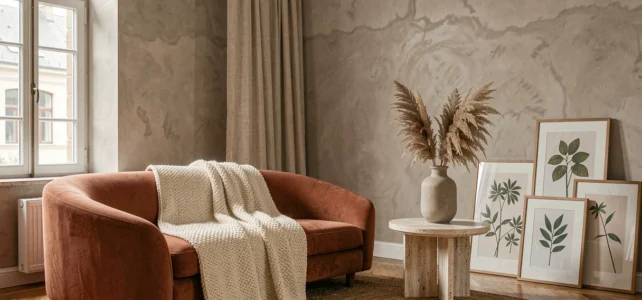
The decor trends for 2024 are defined by a dual movement: a return to raw materials and calming shades, combined with European regulatory pressure that profoundly alters the composition of furniture sold in France. Understanding these two axes allows for sustainable decorative choices that are not just aesthetic.
European Regulation and Decor Furniture: What Changes in Practice
Before discussing colors or styles, a technical point deserves attention. Regulation (EU) 2023/1464 halves the legal limit for formaldehyde emissions for wood-based panels, reducing it to 0.062 mg/m³ starting August 6, 2026. Particle boards, MDF, plywood, and laminate flooring: the majority of accessible decorative furniture is affected.
At the same time, the ESPR regulation (Ecodesign for Sustainable Products Regulation), which came into effect on July 18, 2024, extends eco-design requirements to furniture. It prepares for the future Digital Product Passport, which will detail materials, durability, reparability, and end-of-life for each piece of furniture.
The impact on decor trends is direct. Dismountable, repairable furniture with available spare parts is no longer a militant choice: it becomes the industrial norm. When a decor item recommends an MDF sideboard or a plywood bookshelf, the question of compliance with the new emission limits arises before the question of color. To explore pieces that combine aesthetics and compliance, Les Embellies Déco’s decor selection covers a wide range of current styles.
Calming Colors and Earthy Tones: The 2024 Decor Palette
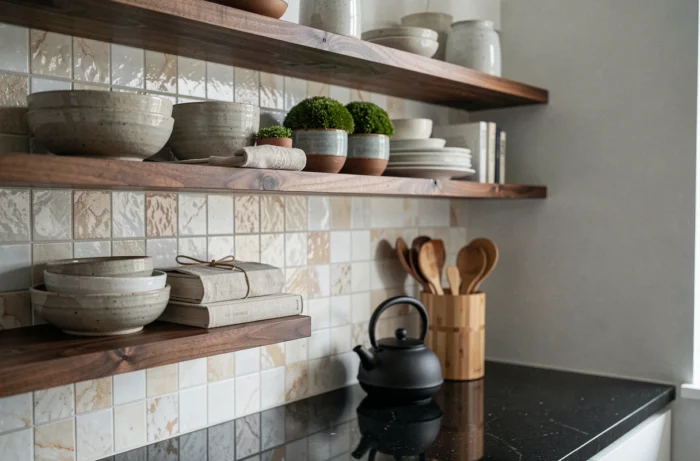
The color trend for 2024 favors neutral and soft tones. Beige, cream, and light gray form the base. Earthy shades like terracotta add a touch of warmth without saturating the space.
Bright colors come in small touches, not as solid blocks. An orange cushion, a Klein blue vase, a brick red throw are enough to energize a room without compromising the serene atmosphere. This approach works particularly well in a bedroom or living room where the primary function remains rest.
A common pitfall is to oppose “neutral palette” and “bright colors” as two distinct trends. In 2024, they coexist within the same interior. The base remains soft, the accents remain bold, and the balance between the two defines the style.
Choosing Shades According to the Room
- Living room and lounge: beige or warm gray base, terracotta or sage green accents on cushions and textiles
- Bedroom: cream and linen tones for the walls, a single bright touch (headboard, light fixture, throw) to avoid visual overload
- Office: deeper shades acceptable (deep blue, forest green) as the space requires concentration, not just relaxation
- Kitchen and dining room: terracotta on a wall or as a backsplash creates a warm focal point without visually reducing the space
Natural Materials and Biophilic Design: Beyond the Trend
Biophilic design refers to the intentional integration of natural elements into an indoor space: natural light, vegetation, raw materials, organic shapes. This concept, often reduced to “putting plants in your home,” goes further.
Solid wood, rattan, stone, linen, and wool play a central role in 2024 interiors. These materials provide a texture that synthetic surfaces cannot replicate. A solid wood tabletop ages, develops a patina, and can be repaired. A melamine tabletop scratches, swells when in contact with water, and is discarded.
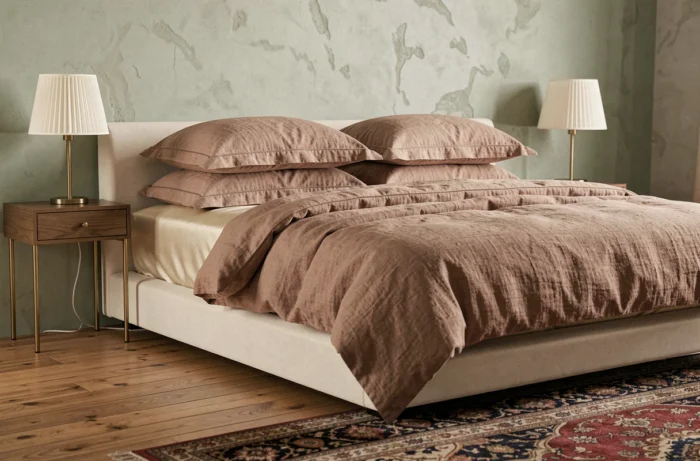
The regulatory constraint mentioned above reinforces this movement. A solid wood piece of furniture does not emit formaldehyde, unlike reconstituted panels. The aesthetic choice aligns with health considerations, which explains why natural materials are not just a passing trend but a structural market direction.
Natural Textiles for Atmosphere
Linen for curtains and bedding, wool for throws and cushions, raw cotton for covers: these textiles create a soft atmosphere without resorting to synthetic fibers. Their irregular texture and slightly variable shades from batch to batch contribute to the authenticity aesthetic that 2024 interiors seek.
Durable Furniture and Eco-Design: Concrete Selection Criteria
With the ESPR regulation, the durability of a piece of furniture becomes a measurable criterion, not a marketing promise. Several points allow for evaluating a decorative piece of furniture before purchase:
- Dismountable structure: a piece of furniture that disassembles can be repaired, transported, and recycled. Screwed or mortised joints are preferable to permanent glues
- Availability of spare parts: replaceable legs, handles, and hinges extend the lifespan by several years
- Nature of the panel: solid wood or certified plywood rather than low-quality particle board, especially for bedroom or enclosed space furniture
- Finish: water-based varnish or natural oil rather than solvent-based polyurethane varnish
These criteria do not oppose style. A solid oak piece of furniture with an oiled finish, clean lines, and tapered legs ticks all the aesthetic and regulatory boxes. The decor trend for 2024 makes these two dimensions compatible by design.
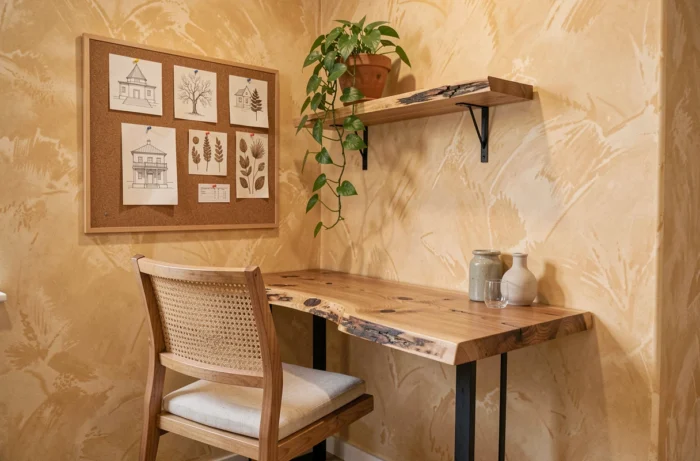
Interior decoration in 2024 marks a turning point where regulation catches up with aesthetics. Choices of materials, colors, and furniture converge towards healthier, more repairable spaces, visually centered on natural shades and raw textures. The next criterion for purchasing a decorative piece of furniture will no longer just be its look in a photo, but the data recorded in its future digital passport.