
The sticker operations in large retail generate their share of enthusiastic comments and frustrations every year. The one that associates Armor Lux with Intermarché is no exception. However, between the overall perception of the Breton brand on review platforms and the concrete in-store experience of obtaining a marine bag or an insulated bottle, customer feedback tells two quite different stories.
Armor Lux Reviews on Trustpilot and iGraal: What the Ratings Really Measure
Armor Lux has a rating of 4.2 out of 5 on Trustpilot with over 700 reviews. On iGraal, the brand has accumulated more than a hundred certified reviews, generally positive. These scores are reassuring, but they concern almost exclusively purchases made on the brand’s e-commerce site or in its own stores.
The feedback focuses on textile quality (striped shirts, sweaters, pajamas), wash performance, and cuts. Several customers mention a durability above the average for ready-to-wear. Negative reviews, on the other hand, target logistics: delivery delays, inconsistent package tracking, order errors.
In other words, none of these platforms distinguish Intermarché’s promotional products from the collections sold through traditional channels. A customer looking for reviews on Armor Lux Intermarché bags therefore encounters evaluations that do not reflect their actual shopping experience.
| Review Source | Overall Rating | Number of Reviews | Evaluated Products |
|---|---|---|---|
| Trustpilot | 4.2 / 5 | 738 | Armor Lux E-commerce (striped shirts, sweaters, accessories) |
| iGraal | Majority Positive | 117 | Online purchases with cashback |
| Social Media / Forums | Variable | Not aggregated | Bags, bottles, towels (Intermarché operation) |
Armor Lux Intermarché Bags: Textile Quality vs. Logistical Frustration
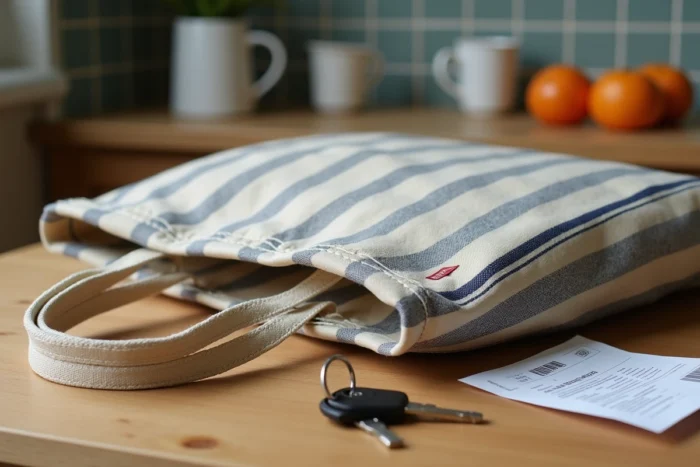
The marine bags offered through the sticker operation bear the Armor Lux logo and incorporate the brand’s visual codes. The recurring question from customers revolves around one specific point: is the quality comparable to that of a product purchased in-store or on the official website?
Field feedback, shared on social media and in consumer discussions, paints a nuanced picture. The workmanship remains acceptable for an item obtained at a reduced price through the stickers. The seams, materials, and finishes are deemed acceptable by the majority of users who express themselves online.
However, the frustration is less about the product than about access to the product. Several testimonials report early stock shortages on the most requested items, such as beach towels or certain bag sizes. A store in a coastal area may run out of stock well before the end of the operation, while a store in a rural area may retain options until the last weeks.
The Most Common Irritants Cited by Customers
- Stock shortages on key items before the end of the sticker collection period, with no possibility of transferring to another store
- Requirement to scan the Intermarché loyalty card at every checkout to accumulate stickers, even for small amounts, leading to forgetfulness and lost stickers
- Discrepancy between the announced discount (which can reach 78% according to promotional materials) and the actual cost once the stickers are collected, as the number of necessary checkouts is rarely anticipated
Loyalty Card and Stickers: The Mechanism That Conditions Customer Feedback
A significant portion of negative reviews does not concern Armor Lux quality but the functioning of the Intermarché sticker system. Without a scanned loyalty card, no sticker is credited. This prerequisite, although mentioned in the operation’s terms, remains a source of misunderstanding for many customers.
The Intermarché app allows users to track sticker accumulation in a dematerialized manner. The paper booklet remains an option, but it requires manually sticking each sticker, with the risk of loss. The two systems coexist, and some users report discrepancies between the balance displayed in the app and the number of stickers actually awarded.
This operational ambiguity colors the overall perception of the operation. A customer who has collected their stickers without difficulty and found the desired item in stock will leave a positive review. Another, faced with a forgotten scan or a stockout, will associate their disappointment with the Armor Lux brand itself, while the issue lies with the Intermarché system.
Discrepancy Between Promotional Promise and Reality in Store
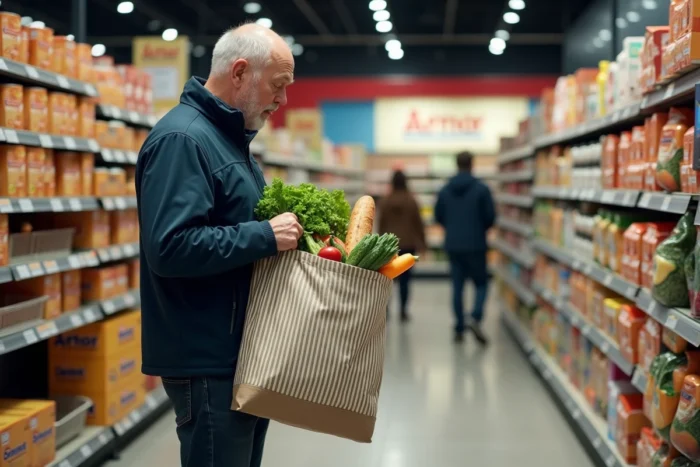
The Armor Lux sticker operation at Intermarché is based on a simple promise: to access branded products at reduced prices through loyalty. On paper, the mechanism works. In practice, the experience largely depends on the store and the timing.
Retail outlets manage their supply independently. There is no centralized stock or reservation system to guarantee the availability of a specific item. This decentralization explains why reviews can vary so much from one customer to another for the same operation.
- Satisfied customers highlight the quality-price ratio of the bags and accessories, the recognition of the Armor Lux brand, and the pleasure of obtaining a branded product at a reduced price
- Disappointed customers point out the time investment (collecting stickers over several weeks) for an uncertain outcome if the targeted item is no longer available
- An intermediate category resorts to a replacement item, leading to mixed reviews: the product is acceptable, but it was not the initial choice
The perception of Armor Lux Intermarché bags thus plays out along two distinct axes. The textile quality of the brand remains generally praised, including for promotional products. The main friction point remains the distribution system, which transforms an announced good deal into an obstacle course for some customers.