
Are you looking for a compact container to store construction materials, moving boxes, or garden furniture? The volume of 3 m³ often appears in rental or purchase quotes. However, this format does not correspond to any ISO maritime standard. Understanding its actual dimensions and usable capacity helps avoid unpleasant surprises on loading day.
3 m³ Container: A Non-Maritime Standard Format to Identify
Standardized maritime containers follow the ISO 668 standard. Their width is set at approximately 2.44 m and their height at around 2.59 m. Common sizes (10, 20, 40 feet) far exceed 3 m³: a 20-foot container already offers an internal volume of about 33 m³.
A container advertised as 3 m³ therefore belongs to a different category. It is most often a non-maritime storage container, sometimes referred to as a box or mobile unit. Some manufacturers also offer variants derived from the 6-foot size (approximately 1.98 m in length, 1.95 m in width, and 1.91 m in height), with an internal volume of around 6 m³, which is double the format we are interested in here.
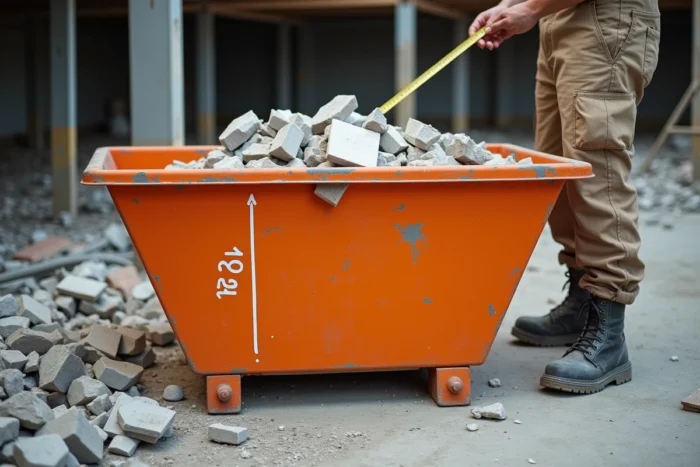
To properly understand the dimensions and capacity of a 3 m³ container, it is important to note that this type of unit typically measures around 1.50 m in length, 1.20 m in width, and 1.50 m in height. These values vary from one manufacturer to another, as no international standard governs this format.
Actual Usable Volume of a 3 m³ Container: Why Subtract 10 to 15%
The figure “3 m³” refers to the theoretical internal volume, measured from wall to wall. In practice, you will never fill this volume to 100%. Why?
Logistics specialists recommend subtracting 10 to 15% from the theoretical volume to estimate a realistic loading. Three factors explain this discrepancy:
- The irregular shapes of objects (furniture, tools, boxes of different sizes) create empty spaces that cannot be filled.
- Protective packaging (blankets, foam, bubble wrap) occupies volume that does not serve the content itself.
- Stacking losses occur when objects cannot be stacked without risk of breakage or crushing.
In concrete terms, a 3 m³ container offers a loadable volume of about 2.5 to 2.7 m³. This figure is sufficient for a small studio move or to store the contents of a medium-sized room.
Loading Capacity: What Fits (and What Doesn’t) in 3 m³
Have you ever tried to fit a three-seater sofa into a car trunk? The problem in a 3 m³ container is of the same order, on a larger scale. The interior height limits vertical objects, and the restricted width complicates the passage of wide furniture.
Items Compatible with This Volume
A 3 m³ container typically accommodates about twenty standard moving boxes, a small piece of furniture like a dresser, a few folding chairs, and garden tools. For professional storage, it is suitable for storing spare parts, small stock, or archives.
Limits to Anticipate
A combined refrigerator or a tall cabinet may not fit in height depending on the model of the container. Always measure the door height, which is lower than the total interior height. A disassembled double bed usually fits in length in most cases, but check the exact dimensions from the manufacturer.
Comparison with 6-Foot and 10-Foot Containers
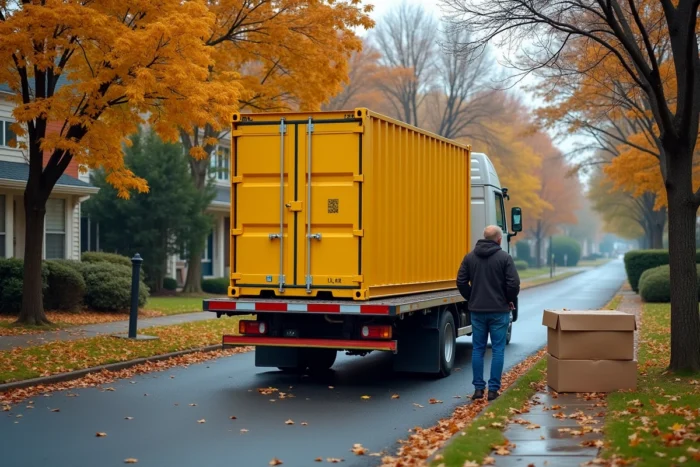
The choice of a storage container depends on the relationship between the required volume and the available ground space. Here’s how the 3 m³ compares to the two most common compact formats:
| Criterion | 3 m³ Container | 6-Foot Container | 10-Foot Container |
|---|---|---|---|
| Length | Approximately 1.50 m | Approximately 1.98 m | Approximately 2.99 m |
| Width | Approximately 1.20 m | Approximately 1.95 m | Approximately 2.44 m |
| Height | Approximately 1.50 m | Approximately 1.91 m | Approximately 2.59 m |
| Internal Volume | Approximately 3 m³ | Approximately 6 m³ | Approximately 6.6 m² of surface |
The 3 m³ takes half the ground space of a 6-foot container. This is its main advantage for a garage, a narrow yard, or an urban construction site where every square meter counts.
On the other hand, the 10-foot (ISO standardized) offers a reinforced, stackable structure that can be transported by crane truck. The 3 m³ container, being lighter, is often moved by hand or with a pallet jack.
Selection Criteria Before Buying or Renting a Compact Container
Before confirming an order, four points deserve precise verification:
- The available ground space: measure the destination area, adding at least 30 cm of margin on each side for ventilation and access.
- The nature of the ground: a metal container placed on soft ground without a slab may sink or rust prematurely from the floor.
- Local regulations: depending on the municipality, placing a storage container in a garden or parking lot may require prior work notification.
- The empty weight of the unit: a model that is too light may not withstand the weather well, while a model that is too heavy complicates delivery without lifting equipment.
The 3 m³ format remains a relevant choice for a one-time need or limited space. For long-term storage or bulky items, a 6-foot or 10-foot container offers better versatility. The actual usable capacity, not the displayed volume, should guide the decision.